算法偏见:平均准确还不够Algorithmic Bias: Look Beyond the Average
校园借书提醒系统总体很准,却经常漏掉一类同学。一个漂亮的平均数,可能藏住什么?A school reminder system looks accurate overall but often misses one group. What can an attractive average hide?
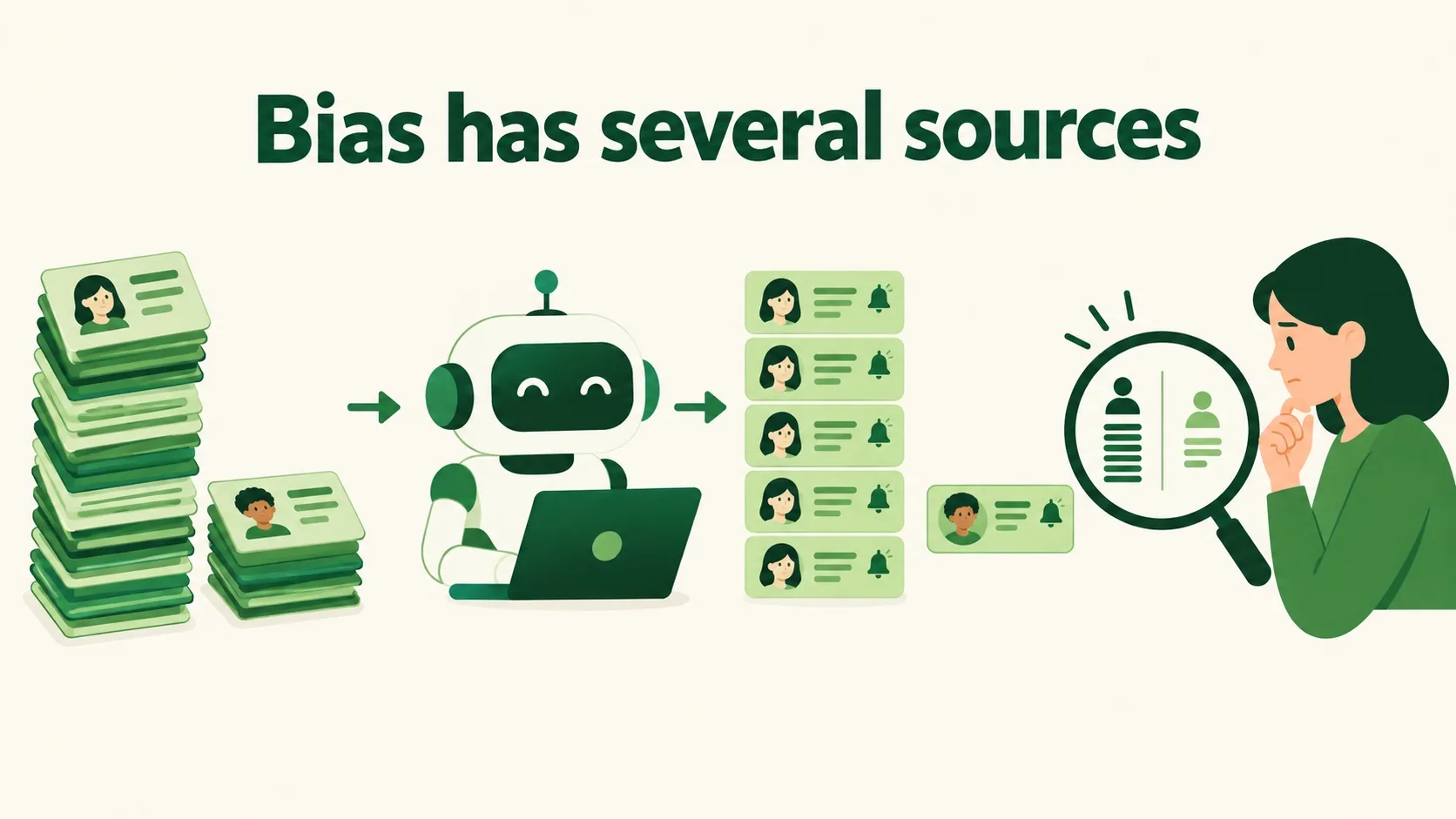
第 1 步:数据与目标带入偏差Step 1: Data and objectives carry assumptions
偏差只会来自程序写错吗?Does bias only come from incorrect code?
训练样本、标签、目标和使用环境都可能产生偏差。数据记录的是过去的过程,不一定是理想结果。某些群体样本少,评估就可能不稳定。程序完全按设计运行,也可能造成不公平影响。判断需要结合场景和受到影响的人。Samples, labels, objectives and deployment conditions can introduce bias. Data records past processes, not necessarily ideal outcomes. Underrepresented groups may have unreliable evaluation. A program can run exactly as designed and still create unfair impacts. Assessment needs context and the perspectives of affected people.
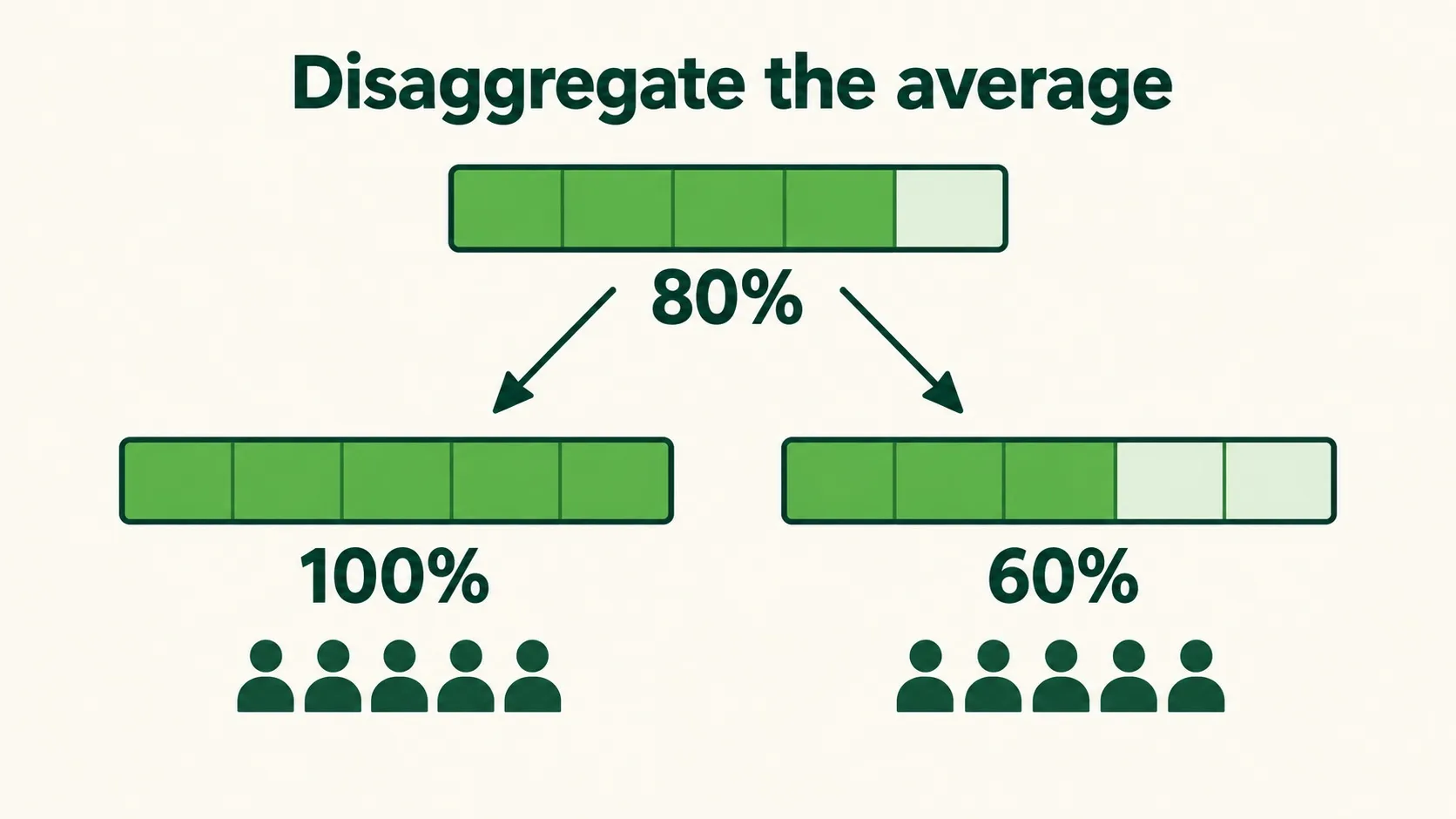
第 2 步:把平均数拆开Step 2: Disaggregate the average
总体准确率高,为什么还要分组看?Why inspect groups when overall accuracy is high?
多数群体表现好,可能盖住少数组的问题。要分别看漏判、误判和样本数。不同指标回答不同问题。只比较通过率,也不能确定原因。下面用完全虚构的两个组做阈值实验。分组是为了观察差异,不是在宣称任何真实群体能力不同。Good performance on a large group can conceal problems in a smaller one. Inspect false negatives, false positives and sample sizes. Different metrics answer different questions; acceptance rates alone do not establish causes. The threshold experiment uses wholly fictional groups to reveal differences, not to claim real groups differ in ability.
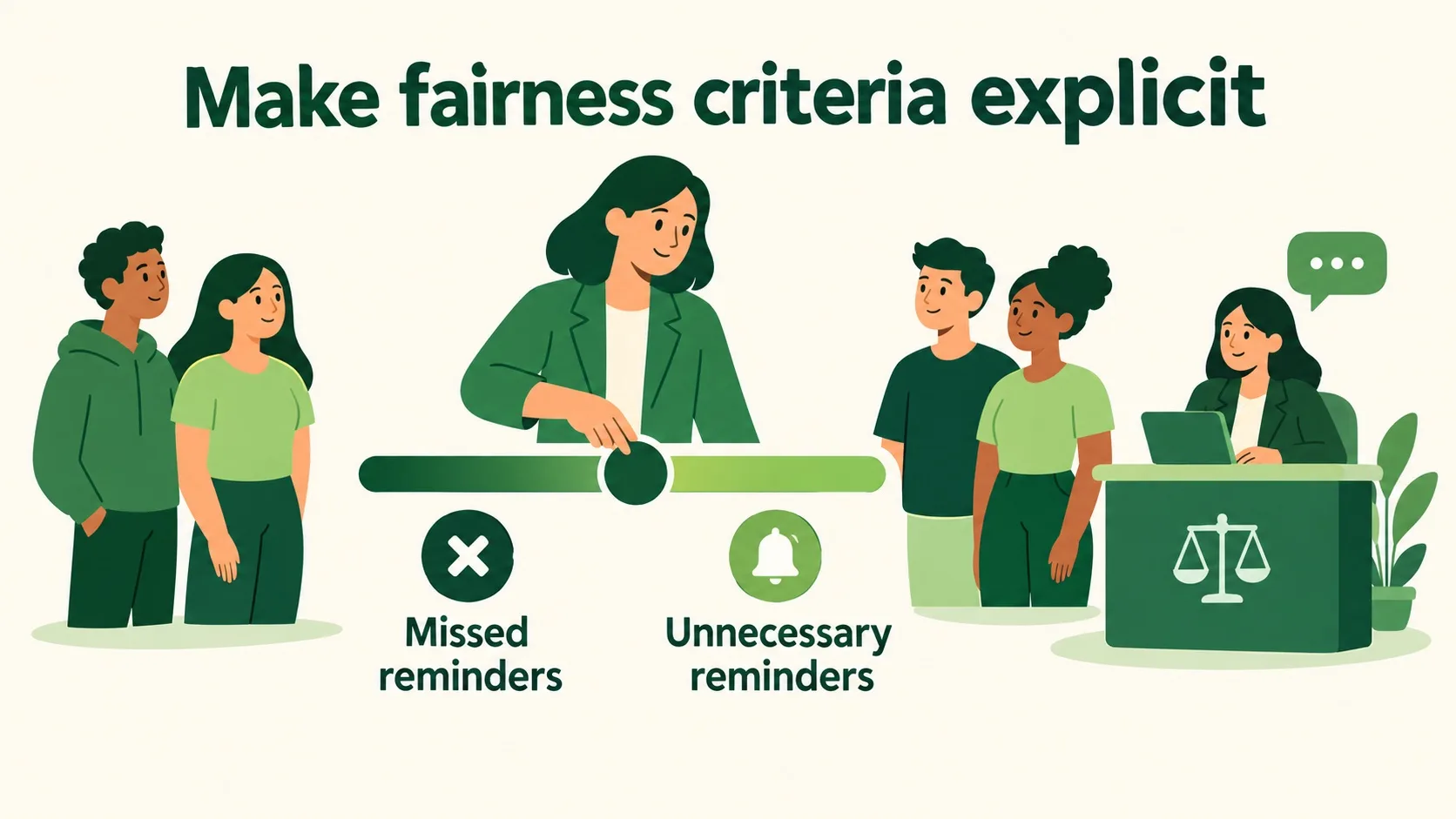
把两组数字调一样,就公平了吗?Do matching two numbers prove fairness?
公平有多种定义,可能无法同时满足。应先明确任务风险和评价标准。可以改进数据、目标、流程或人工复核。阈值变化会改变误判与漏判。不能只修一个指标就宣布问题解决。持续监测与申诉渠道,能帮助发现模型之外的问题。Fairness has several definitions that may conflict. Clarify task risks and criteria before choosing changes to data, objectives, procedures or review. Threshold adjustments change both false positives and false negatives. Fixing one metric does not settle the issue. Monitoring and appeal routes can reveal problems beyond the model itself.
🎮 阈值与分组结果🎮 Thresholds and group outcomes
拖动阈值,查看两组漏判、误判和总体准确率,再满足四个明确目标。Adjust the threshold and inspect each group’s misses, false alerts and overall accuracy, then meet four explicit objectives.
一句话记住它:Remember: 算法偏见要从数据、指标、使用环境和人的影响一起检查。Assess algorithmic bias across data, metrics, context and human consequences.
总体准确不能代替分组评估。Overall accuracy cannot replace subgroup evaluation.统计差异本身还不解释原因。A statistical difference alone does not explain its cause.公平标准与权衡要说清楚。Fairness criteria and trade-offs must be explicit.
把握度:风险框架较高。公平标准存在价值与情境差异;虚构分组不能代表现实人群。Confidence: high for the risk framework. Fairness standards vary with values and context; fictional groups do not represent real populations.
AI 辅助制作与资料核对。插图和互动为教学示意。AI-assisted production and source checking. Illustrations and interactions are teaching models.
 Back to tree