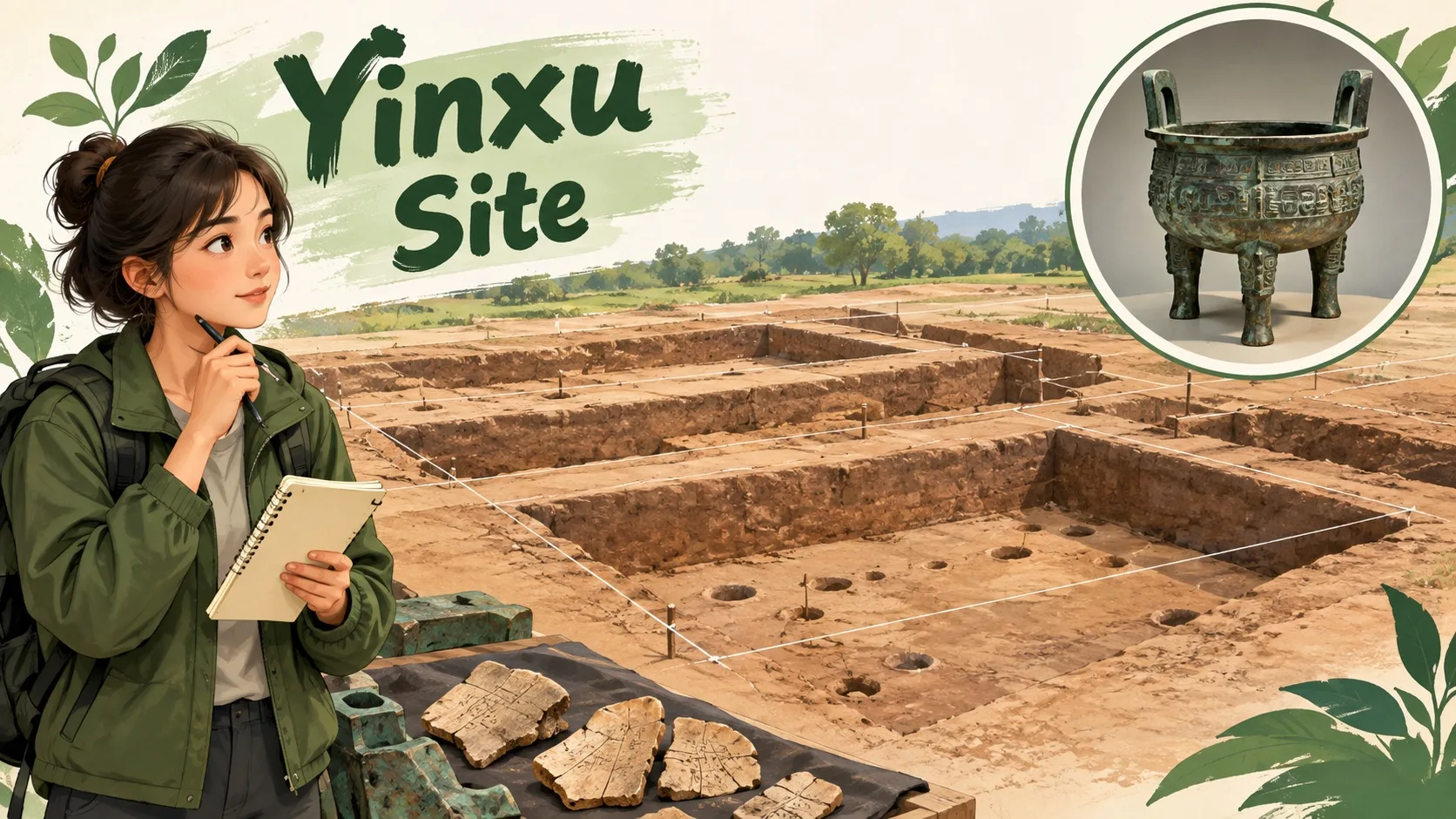
从未解印章翻到有字的骨片。阿禾来到安阳殷墟找证据。From an undeciphered seal, Ahe turns to inscribed bones at Yinxu near Anyang.
第 1 步:先把地点钉牢Step 1: Locate the evidence
殷墟是商代晚期的都城遗址。Yinxu was a capital in the late Shang period.
宫殿基址、墓葬与作坊彼此关联。考古学家记录它们的位置。物品放在哪里,也是历史信息。Palace foundations, tombs and workshops connect to one another. Archaeologists record their locations. The place where an object was found is part of the evidence, not merely a spot on a map.
第 2 步:骨片与青铜互相补充Step 2: Bones and bronzes complement
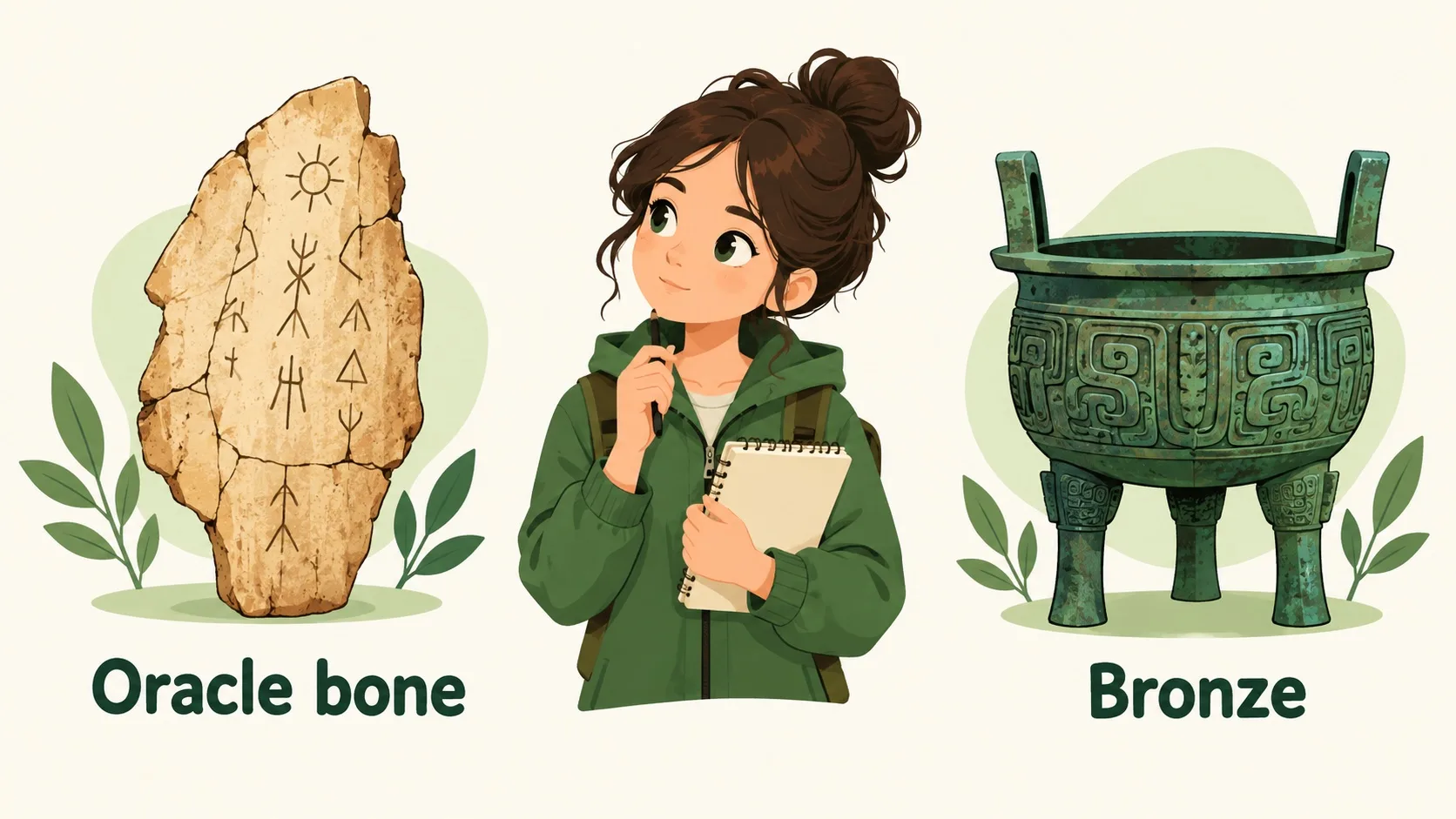
甲骨文记录占卜等活动。Oracle-bone inscriptions record divination and related activities.
它是已知成熟的早期汉字系统。青铜器说明铸造技术与礼仪。文字和器物一起,帮助理解商代社会。They preserve an early mature form of Chinese writing. Bronze vessels reveal casting skill and ritual practices. Inscriptions and objects together help reconstruct Shang society.
第 3 步:传说与证据分开放Step 3: Distinguish stories and evidence
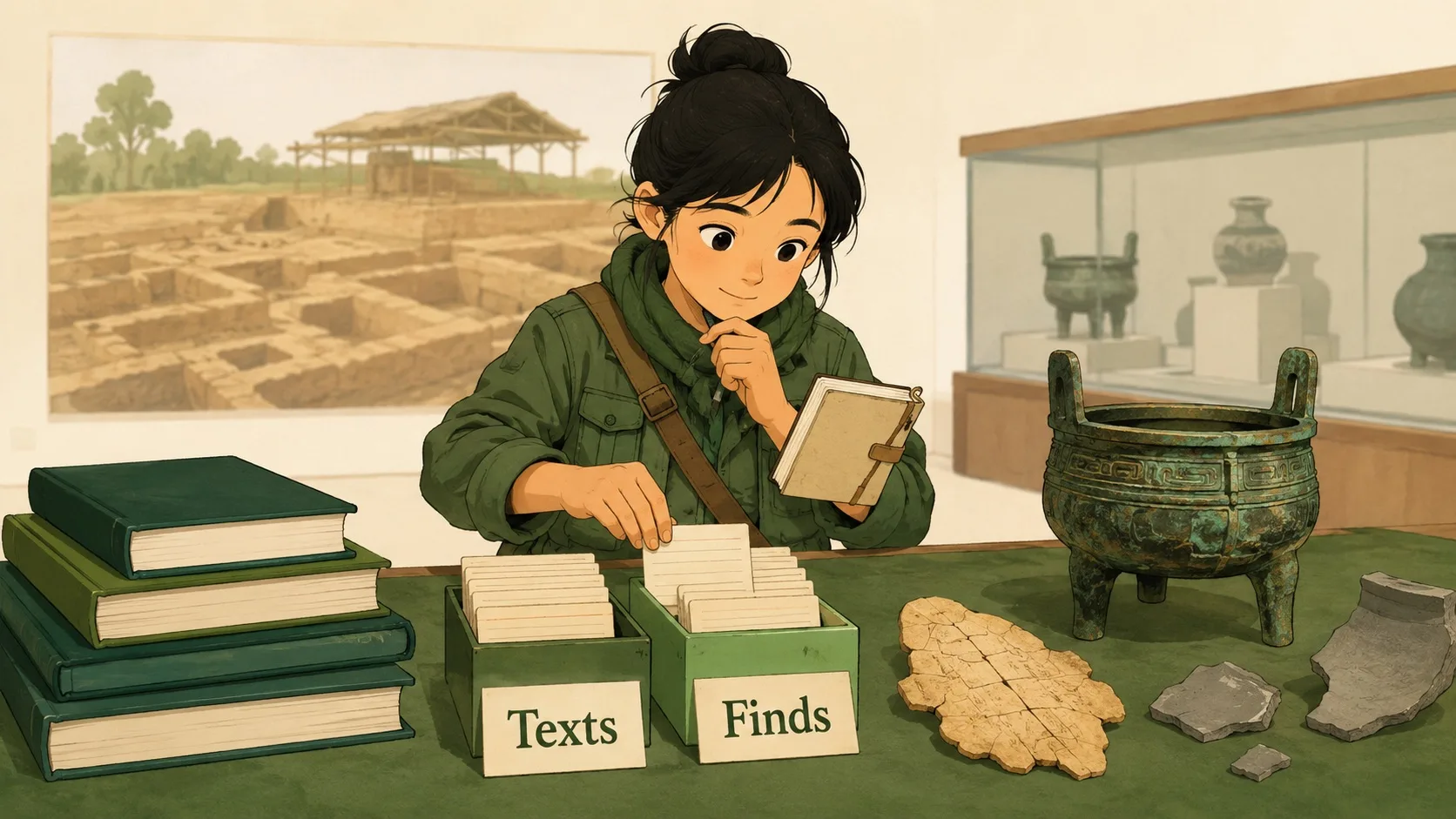
阿禾给旅行册贴上证据标签。Ahe adds evidence labels.
古代文献、传说和出土物并不相同。商代以前也有丰富遗址。某处遗址对应哪个古国,有时仍待讨论。Later texts, traditional stories and excavated objects are different kinds of sources. Rich archaeological cultures existed before the Shang. Identifying a particular site with a named early dynasty can require further argument.
🎮 证据工作台🎮 Evidence desk
把五张卡分为“观察/有记录”与“解释/待证”。先看证据支持多大结论。Sort five cards into “Observed / documented” or “Interpretation / unproven”. Ask how much the evidence actually supports.
一句话记住它:殷墟提供商代晚期证据。Remember: Yinxu documents the late Shang.
殷墟提供商代晚期证据。Yinxu documents the late Shang.甲骨文字与器物可以互证。Inscriptions and objects can be compared.传说不能直接当出土事实。Traditional stories are not excavated facts.
依据上述公开资料编写 · AI 辅助制作 · 发现问题欢迎指正,帮这片叶子长得更好。Based on the public sources above · AI-assisted production · Spotted a problem? Tell us — help this leaf grow.
 Back to tree