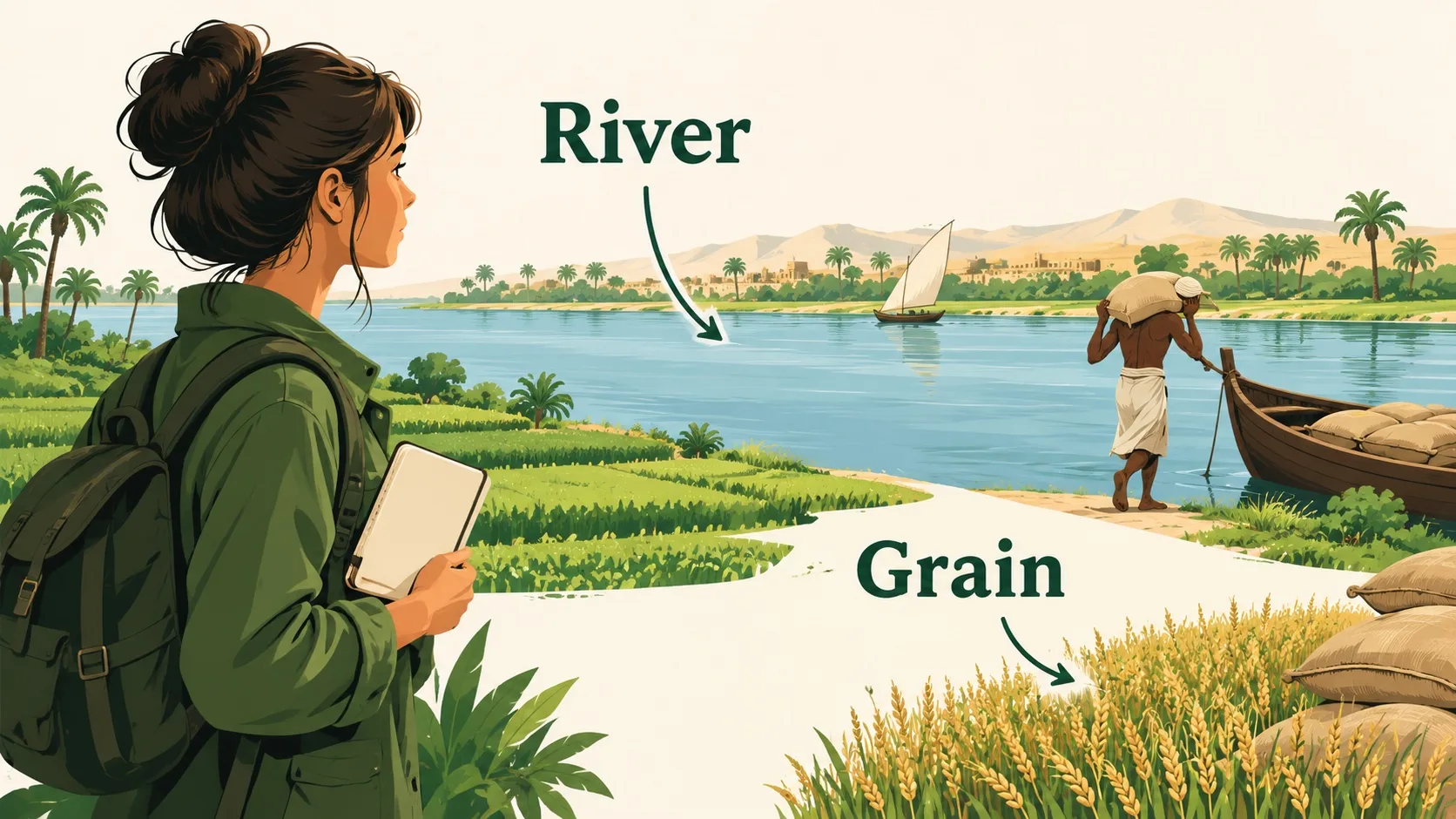
沿着河流,阿禾来到尼罗河畔。这次的旅行册从一袋粮食开始。Following another river, Ahe reaches the Nile. This notebook page begins with a sack of grain.
第 1 步:河水与粮食Step 1: River and grain
尼罗河穿过干旱地区。The Nile crosses a dry landscape.
古代洪水带来水和泥沙。农人还要修渠、播种和收割。收成受水量与管理影响。河流提供条件,劳动把条件变成粮食。Ancient floods supplied water and sediment. Farmers still had to manage fields, sow and harvest. Water levels and human decisions affected yields. The river offered possibilities; labour turned those possibilities into food.
第 2 步:粮食支持分工Step 2: Food supports specialists
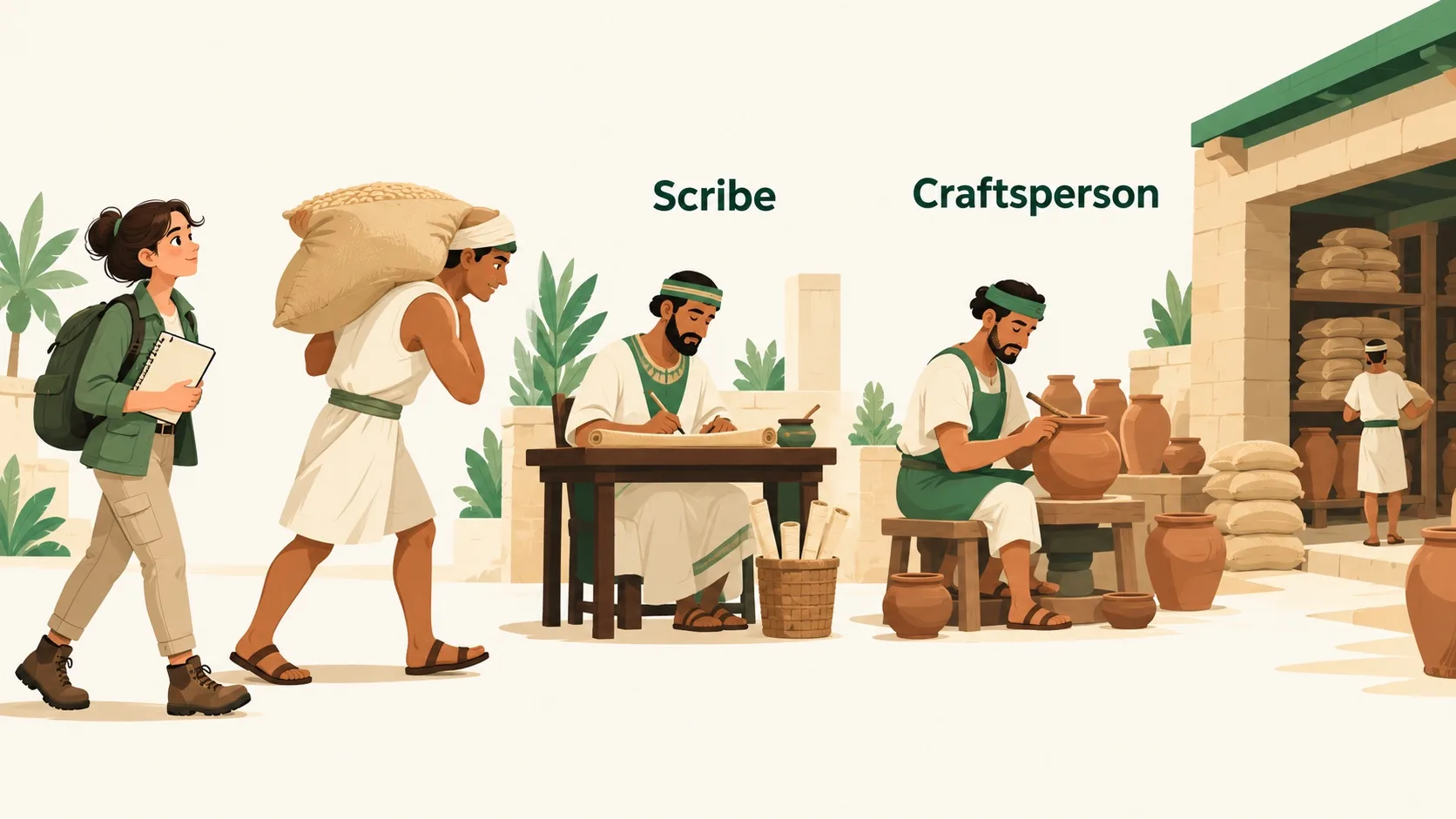
一袋粮食送进仓库。A grain sack enters a storehouse.
书吏记录,工匠制作工具。统治者与神庙调配部分资源。法老是古埃及君主的称呼。官员和普通劳动者,也共同组成社会。Scribes record it while craftspeople make tools. Rulers and temples managed some resources. Pharaoh is a term for Egypt’s rulers. Officials, farmers and craftspeople all shaped society, although their power was unequal.
第 3 步:石头之外还有日常Step 3: Look beyond monuments
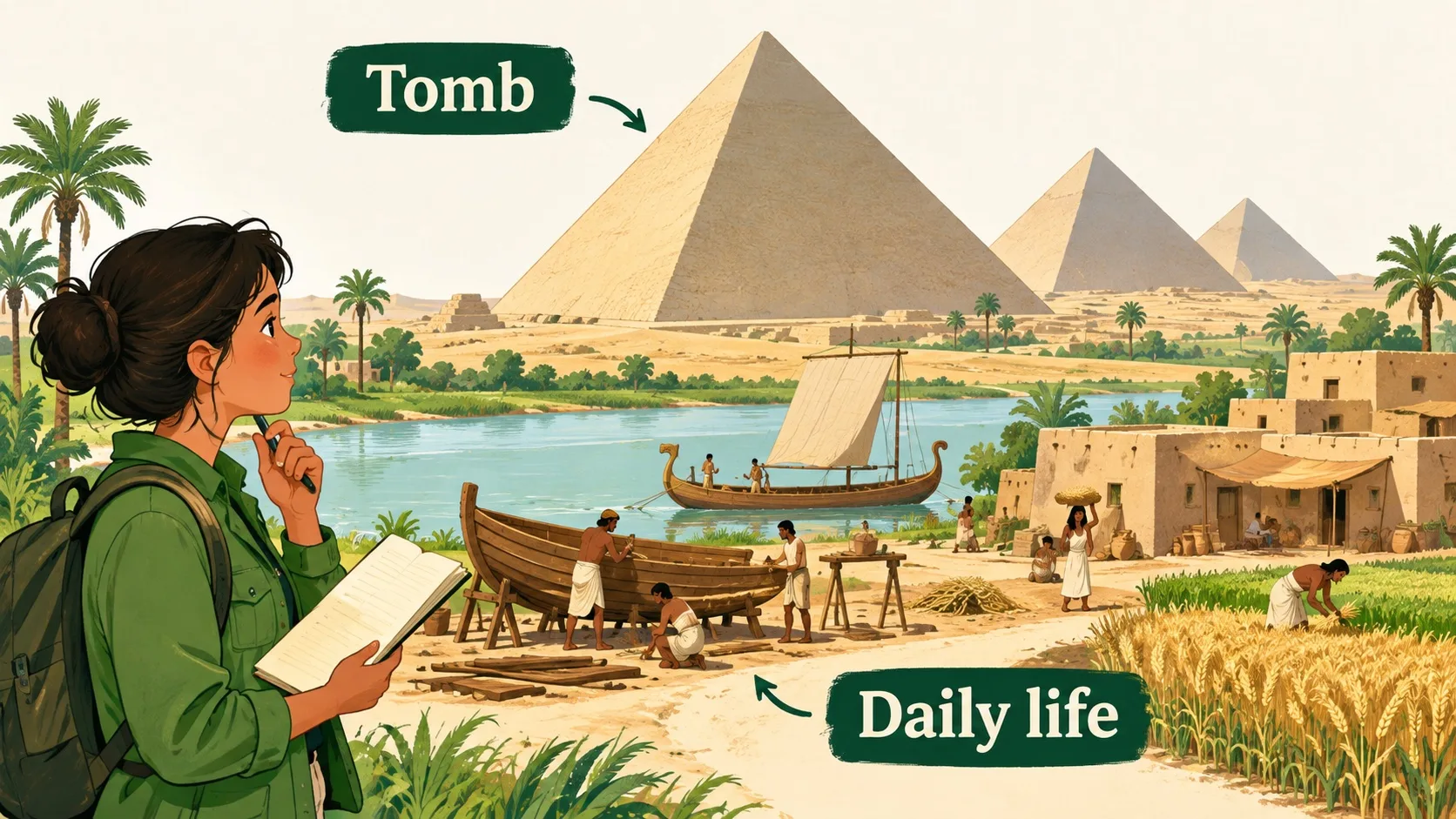
阿禾看到陵墓,也记录船和住屋。Ahe records boats and homes alongside tombs.
金字塔反映王权与丧葬信仰。粮仓和工具说明日常劳动。古埃及延续很久,制度不断变化。不能把各时代画成同一幅图。Pyramids reveal royal authority and funerary beliefs. Tools and settlements reveal everyday work. Ancient Egyptian history spans many periods; institutions and practices changed. One monument cannot represent every person or century.
🎮 追踪一袋粮食🎮 Follow a sack of grain
按任务说明连好四条关系。依次点起点和终点;再次点击同一对可取消。图是关系示意,不是地理地图。Build the four relationships described below. Select a start and an end; repeat a pair to remove its link. This is a relationship diagram, not a geographic map.
一句话记住它:尼罗河支持农业和交通。Remember: The Nile supported farming and travel.
尼罗河支持农业和交通。The Nile supported farming and travel.社会依靠多种劳动分工。Society depended on many kinds of work.古埃及各时期存在变化。Ancient Egypt changed over time.
依据上述公开资料编写 · AI 辅助制作 · 发现问题欢迎指正,帮这片叶子长得更好。Based on the public sources above · AI-assisted production · Spotted a problem? Tell us — help this leaf grow.
 Back to tree