小树从家去学校,再去集市。城市设计怎样改变每天花在路上的时间?Mia travels from home to school and then the market. How does city design change everyday travel time?
第 1 步:把活动聚在一起Step 1: Bring activities together
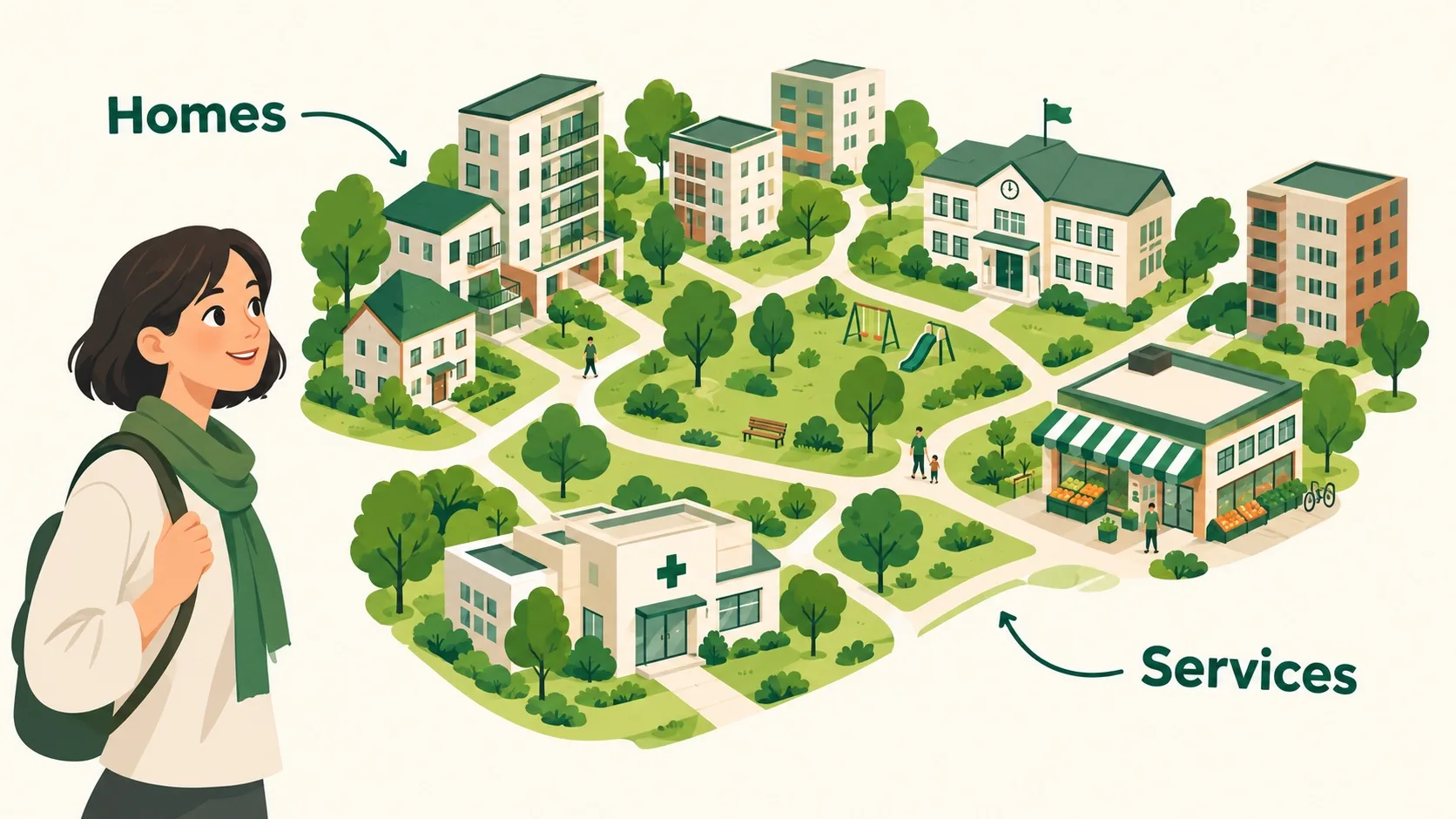
为什么许多人聚居一地?Why do many people live together?
城市集中居住、工作和公共服务。距离缩短可能方便交流。但人口集中也增加住房与设施需求。城市不是只有高楼。Cities concentrate homes, work, and public services. Proximity can make exchange easier. Concentration also increases demand for housing and infrastructure. A city is more than tall buildings.
第 2 步:连接方式影响可达性Step 2: Connections affect access
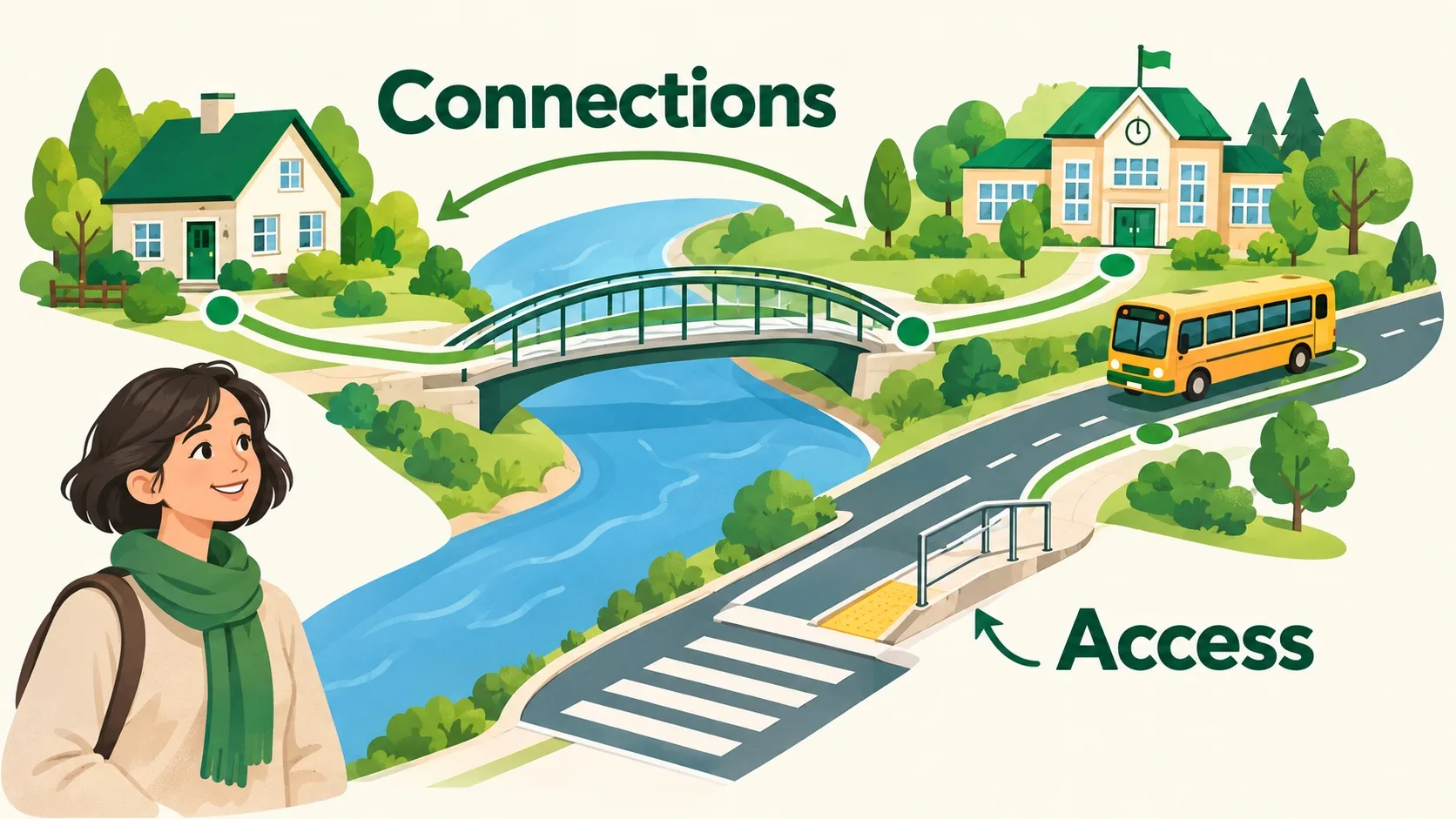
近在地图上,就一定到得了吗?Does closeness on a map guarantee access?
河流、道路和台阶可能成为障碍。公共交通与步行网络连接目的地。可达性要看时间、费用和身体条件。直线距离只是其中一项。A river, road, or steps can be a barrier. Transit and walking networks connect destinations. Access depends on time, cost, and physical ability. Straight-line distance is only one factor.
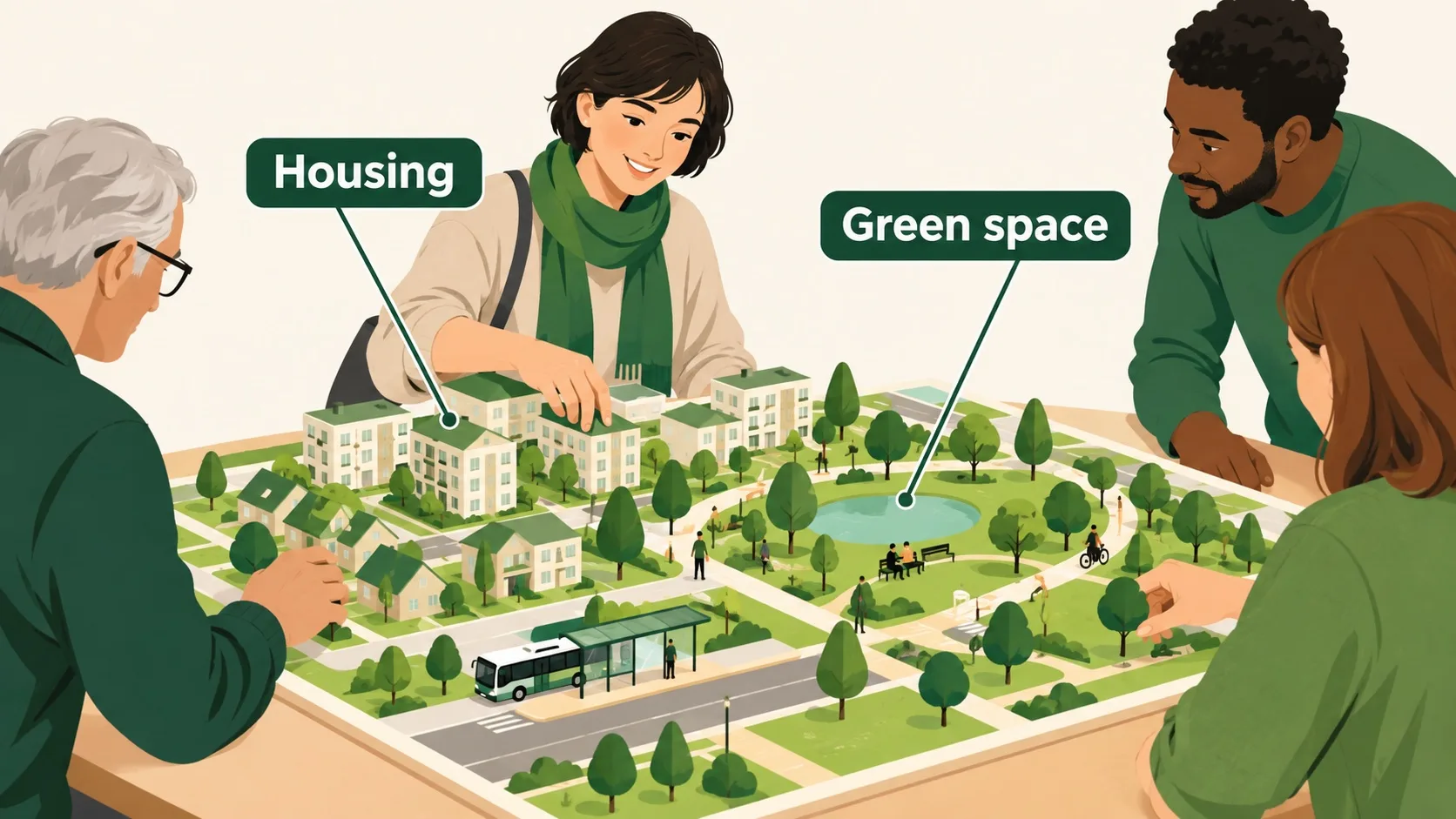
怎样让更多人生活方便?How can convenience extend to more people?
规划要兼顾住房、交通与绿地。密度高低都不能单独判断好坏。居民参与帮助识别遗漏需求。方案要用实际使用结果检验。Planning balances housing, transport, and green space. Density alone does not determine quality. Participation helps reveal overlooked needs. Plans should be tested against how people actually use them.
🎮 机制实验室:观察,再判断🎮 Mechanism lab: observe, then decide
家位于二,河在五。学校在河对岸且桥关闭时,绕行增加四单位。桥开放后走直接街道。简化示意。Home is at 2; the river is at 5. A school across the river adds a 4-unit detour when the bridge is closed. An open bridge permits the direct street. Schematic only.
一句话记住它:Remember it:城市设计组织距离与连接,目标是让生活服务更可达。City design organizes distances and connections so everyday services become accessible.
城市集中居住、工作和公共服务。Cities concentrate homes, work, and public services.河流、道路和台阶可能成为障碍。A river, road, or steps can be a barrier.规划要兼顾住房、交通与绿地。Planning balances housing, transport, and green space.
城市系统框架:较高把握。简化地图不代表具体城市的交通预测。High confidence in the systems framework. The simplified map does not forecast traffic in a particular city.
核对日期:2026 年 10 月 6 日。文字与配图由 AI 生成;已做来源核对及程序测试,待人工复核。Checked 6 October 2026. Text and illustrations are AI-generated. Sources and software checks were performed; human review is pending.
 Back to tree