数字鸿沟:连上网,只是第一步Digital Divide: More Than a Connection
班级作业都搬到网上。小禾家网速很快,朋友却只有共享手机。发出同一个链接,机会就相同了吗?Homework moves online. He has fast internet while a friend shares one phone. Does the same link create equal opportunity?
第 1 步:能不能接入Step 1: Can people connect?
先看网络和设备是否可用。Start with network and device availability.
数字鸿沟指数字技术机会与收益的差距。覆盖、设备和费用都可能构成障碍。有信号,不代表买得起流量。有手机,也不代表适合写长作业。共享设备还会限制使用时间。判断接入条件,要看实际可用性,而不只看有没有一个账号。The digital divide concerns unequal opportunities and benefits from digital technology. Coverage, devices and costs can create barriers. A signal does not make data affordable, and a phone may be unsuitable for a long assignment. Shared devices limit time. Assess actual usability rather than simply counting accounts.
第 2 步:会不会用,用起来怎样Step 2: Can people use it effectively?
网络补上了,问题全解决了吗?Does providing a connection solve everything?
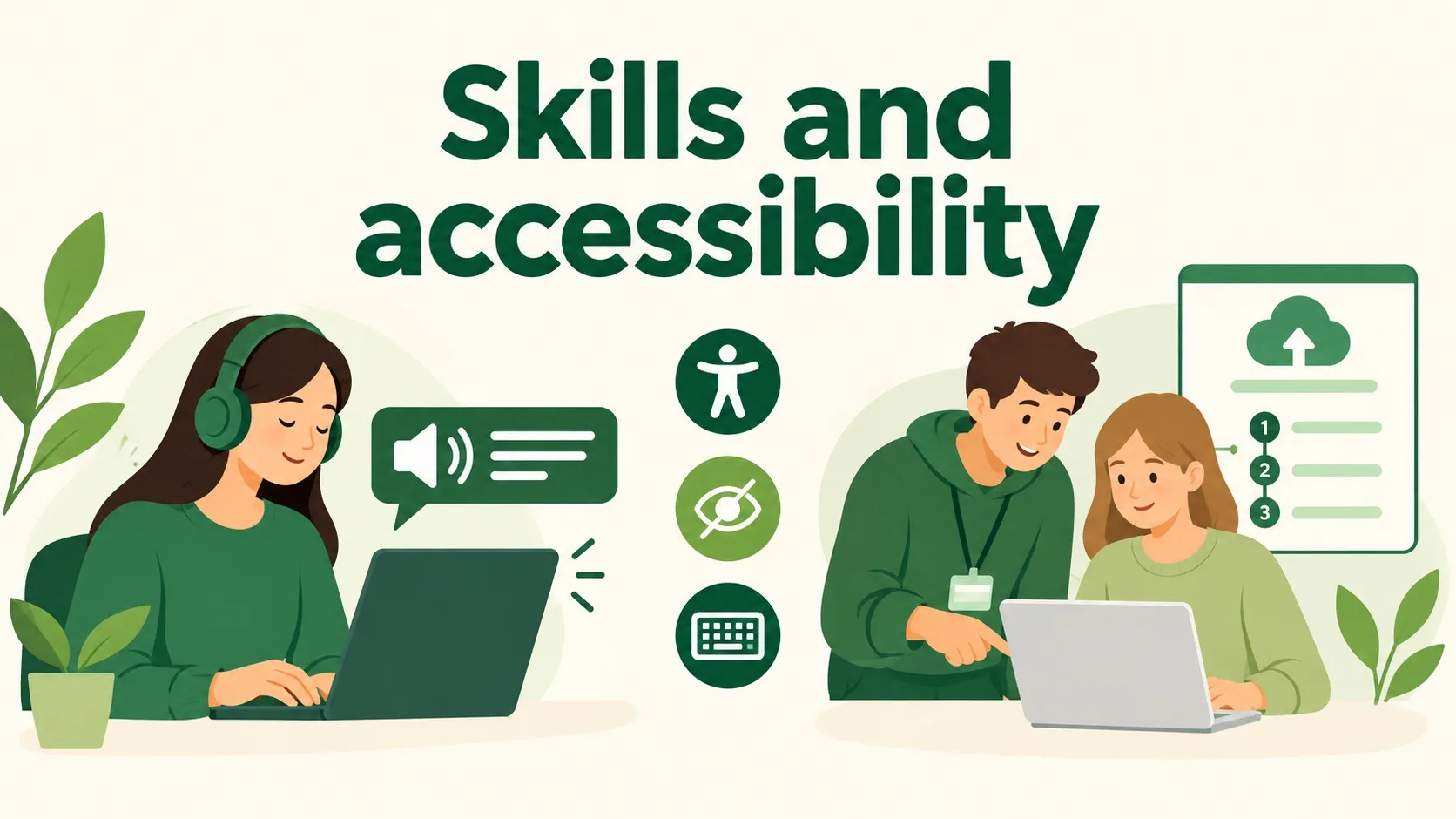
数字技能、语言和无障碍设计也重要。有人不熟悉上传作业,有人需要读屏支持。界面若只有图片文字,可能让部分人无法参与。不能把使用困难都归因于个人不努力。服务设计和支持方式,同样影响谁能真正受益。Skills, language and accessibility matter too. Some people need help uploading work or rely on screen readers. Interfaces built only from image text can exclude users. Difficulty should not automatically be blamed on individual effort: service design and support shape who benefits.
第 3 步:按障碍分配帮助Step 3: Address the actual barrier
一笔预算先补哪一块?What should a limited budget address first?
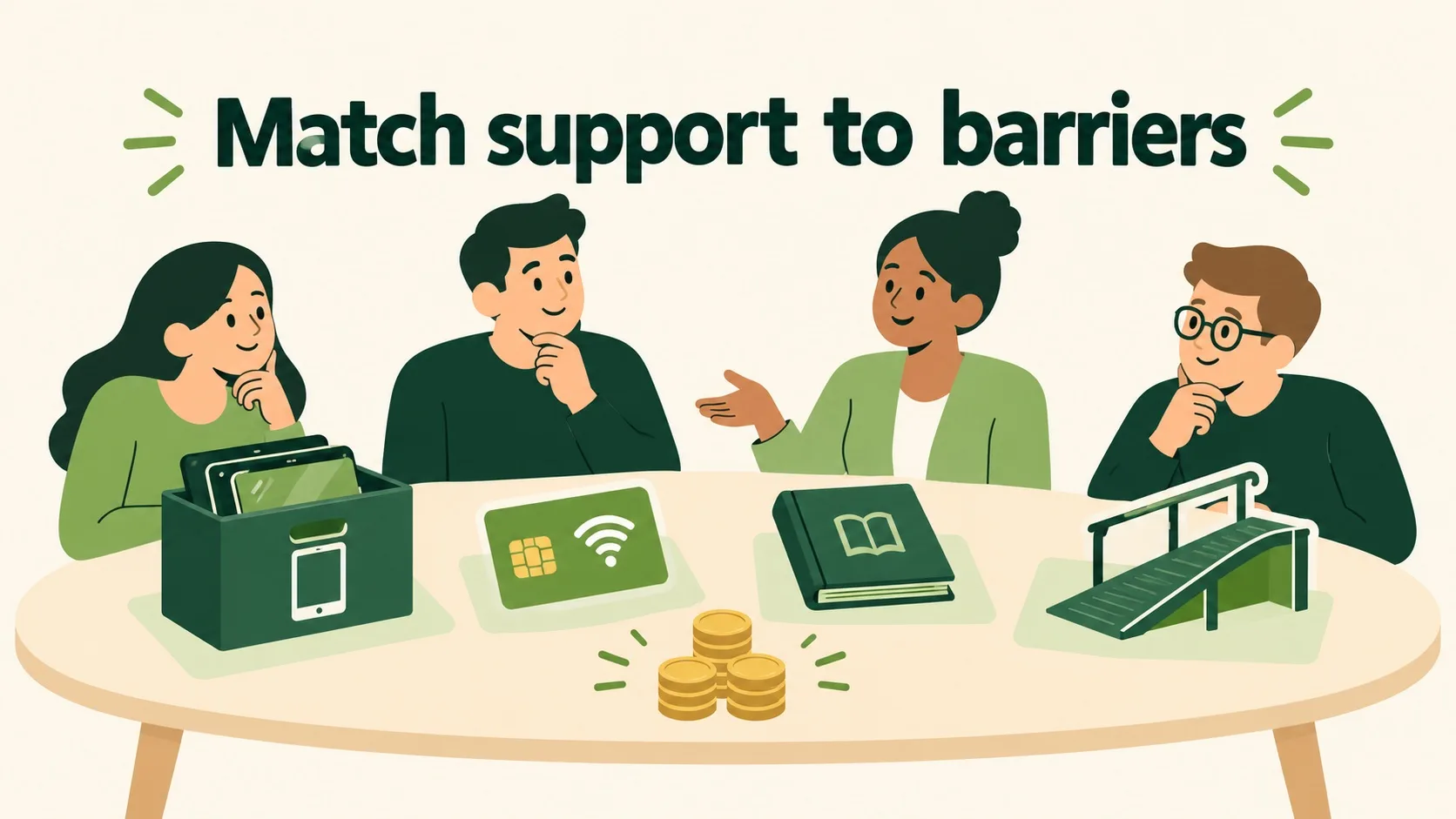
先了解谁遇到什么障碍。借用设备、资费支持、技能培训和无障碍改造,各解决不同问题。小禾保留离线提交途径,避免服务突然排除同学。干预后还要看任务是否真正完成。互动中的预算和效果是虚构的,不代表真实政策测算。Identify who faces which barrier. Device loans, cost support, training and accessibility improvements address different problems. He keeps an offline submission route so classmates are not abruptly excluded. Evaluate whether people can actually complete the task afterward. The activity’s budget and effects are fictional, not policy estimates.
🎮 把支持给到需要处🎮 Match support to needs
读取每位同学的障碍,分配两项支持,让他能完成作业。Read each learner’s barriers and choose two supports that enable the assignment.
一句话记住它:Remember: 数字公平要看能否接入、有效使用并实际受益。Digital inclusion concerns access, effective use and real benefit.
覆盖不等于负担得起。Coverage does not imply affordability.技能和无障碍同样重要。Skills and accessibility also matter.支持应根据具体障碍设计。Support should address specific barriers.
把握度:障碍分类较高;具体差距与干预效果依地区和人群而异。人物与预算为虚构。Confidence: high for barrier categories; local gaps and intervention effects vary. People and budgets are fictional.
AI 辅助制作与资料核对。插图和互动为教学示意。AI-assisted production and source checking. Illustrations and interactions are teaching models.
 Back to tree