文化馆给雨桥故事配乐。快慢、高低和音色各改变什么?The fair scores the rainy-bridge story. What do speed, pitch and timbre change?
第 1 步:拍子与节奏Step 1: Pulse and rhythm
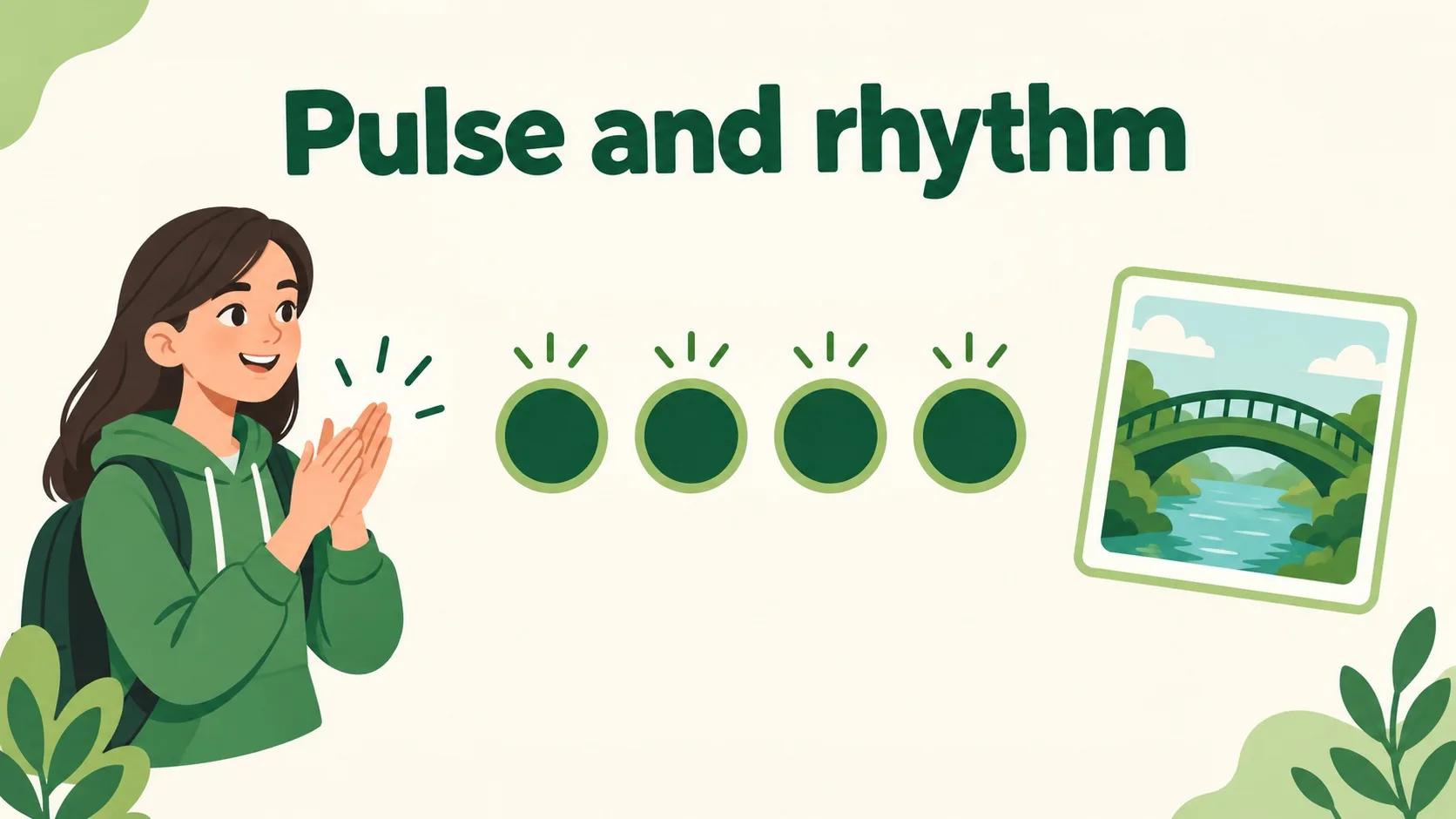
先用拍手找到时间的安排。Start by clapping the timing.
拍子可提供重复的时间参照。节奏安排声音的长短和起落。速度表示进行得多快。节奏相同,速度仍可不同。A pulse can provide a repeating time reference. Rhythm arranges durations and onsets. Tempo concerns speed. The same rhythmic pattern can be played at different tempi.
第 2 步:旋律与音色Step 2: Melody and timbre
时间有了,声音怎样变化?How does the sound change within that timing?
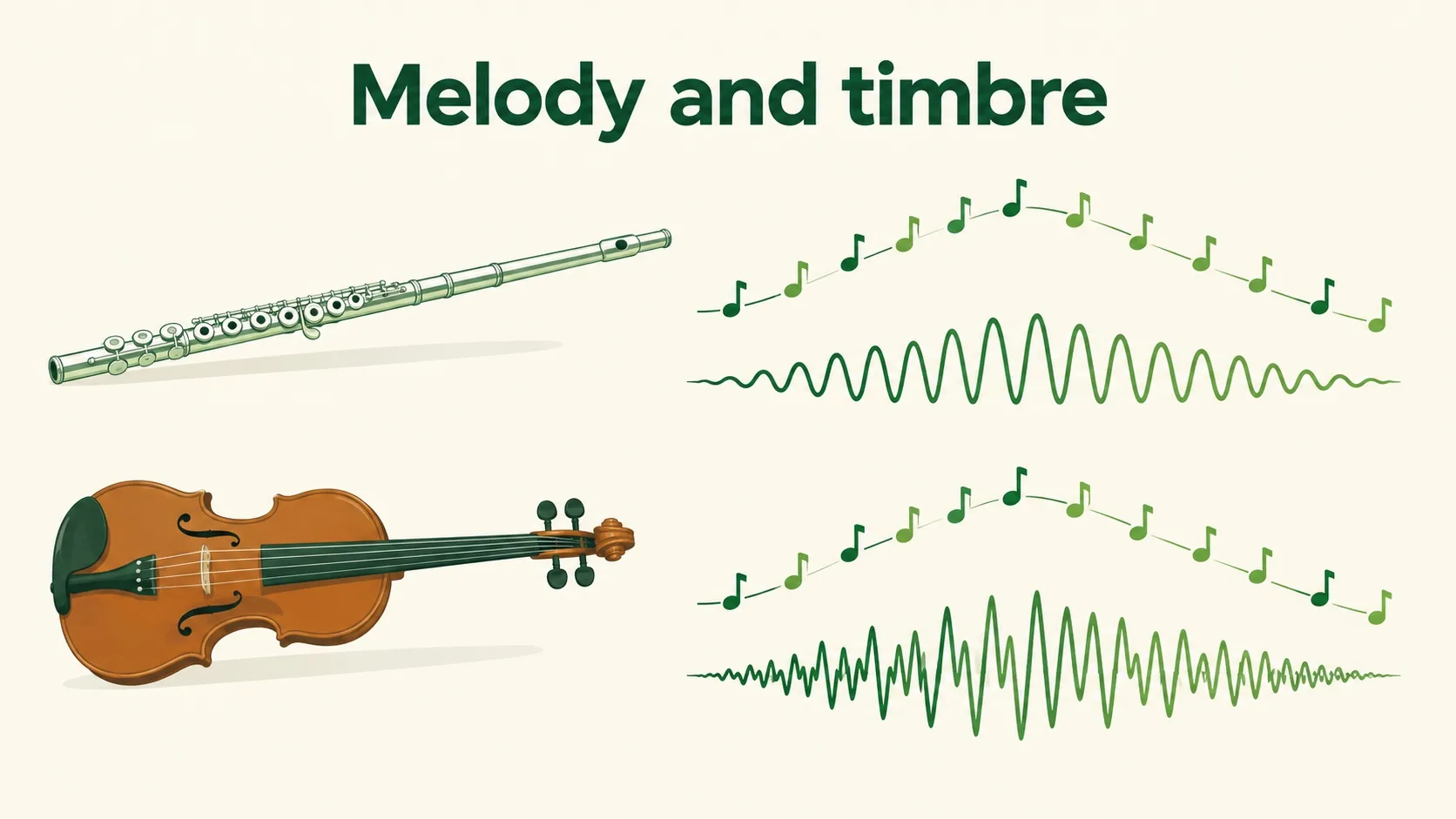
旋律把不同音高连成线索。音色让我们区分笛子和小提琴。换乐器可以改变音色,却不必改变旋律。和声涉及同时发声的关系。Melody forms a line of pitches. Timbre helps distinguish a flute from a violin. Changing instruments can change timbre without changing melody. Harmony concerns simultaneous pitch relationships.
第 3 步:听见文化语境Step 3: Listen in context
配乐为何让不同人有不同感觉?Why can listeners respond differently?
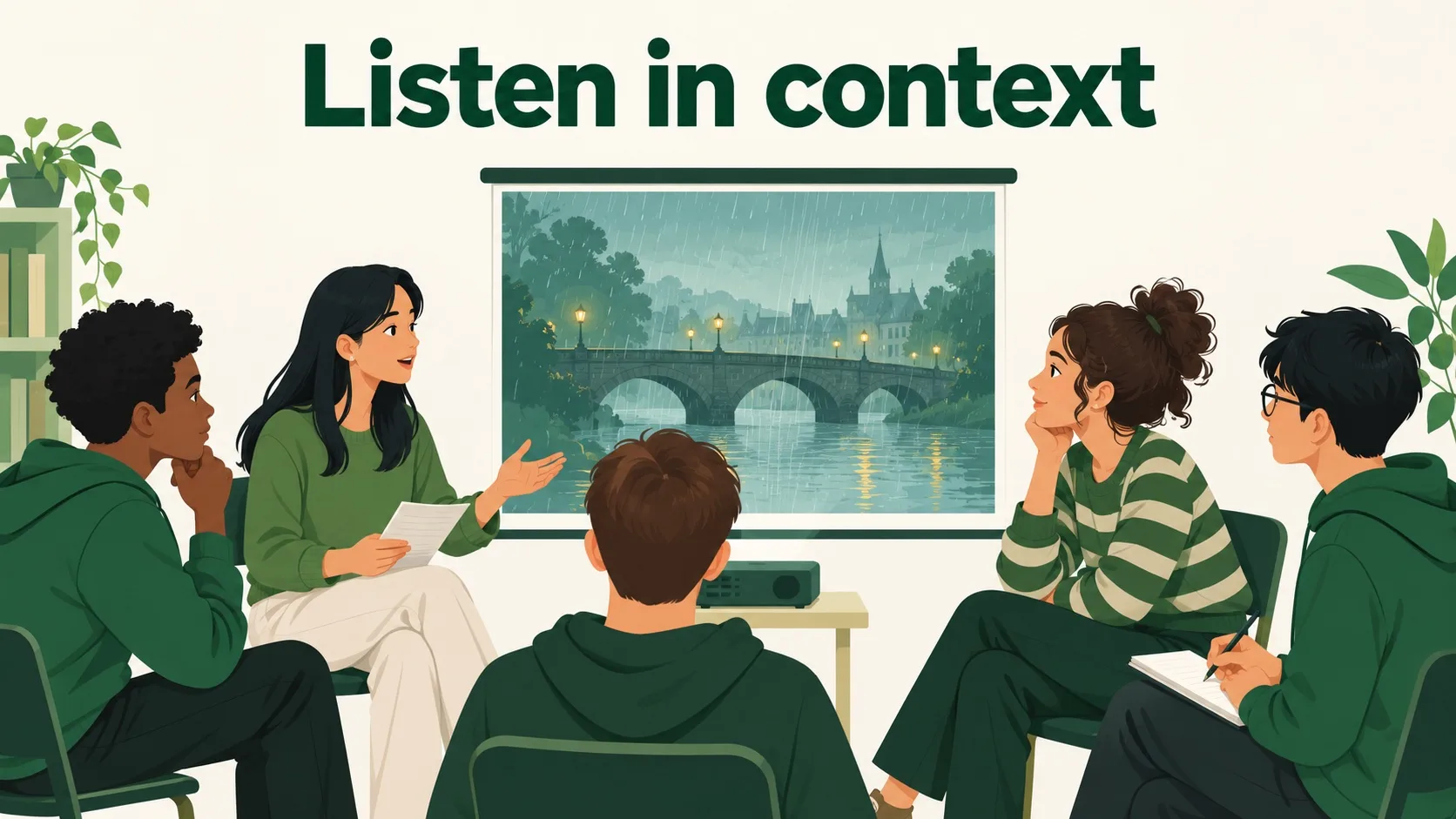
创作会使用重复、变化和停顿。情绪还受故事与听觉经验影响。不同音乐传统有不同的音阶和组织方式。不能只用一套标准衡量。Composers use repetition, variation and silence. Story context and listening experience also shape emotion. Traditions organize scales and musical relationships differently; one standard cannot cover them all.
🎮 你来探索与判断🎮 Explore and reason
先操作实践台,再用四个挑战检验理解。每次判断都能看见理由。Explore the practice table, then try four challenges. Each judgment comes with a reason.
一句话记住它:音乐在时间里组织声音和静默。Remember: Music organizes sound and silence through time.
节奏与速度不是同一件事。Rhythm and tempo differ.音高与音色要分开听。Distinguish pitch from timbre.理解作品还要看文化语境。Context helps us understand music.
来源与理解边界Sources and limits
术语用于入门。不同传统的音乐概念不完全相同,情绪联想也非固定对应。Terms are introductory. Musical concepts vary across traditions, and emotions do not have fixed musical codes.
来源查阅:2026 年 10 月 6 日。场景与例题为教学创作;插图为概念示意,不是历史实物照片。Sources checked on 6 October 2026. Scenarios and exercises are educational creations; illustrations are conceptual, not historical photographs.
参考上列公开资料 · AI 生成与自动化检查 · 欢迎提供可核查的勘误。Based on the public sources above · AI-generated and automatically checked · Verifiable corrections are welcome.
 Back to tree