同一座雨桥,小林要写成故事。发生什么,才会让人想读?Lin turns the rainy bridge into a story. What makes readers want to continue?
第 1 步:人物有目标Step 1: Characters have goals
先让人物想做一件事。Give a character something to pursue.
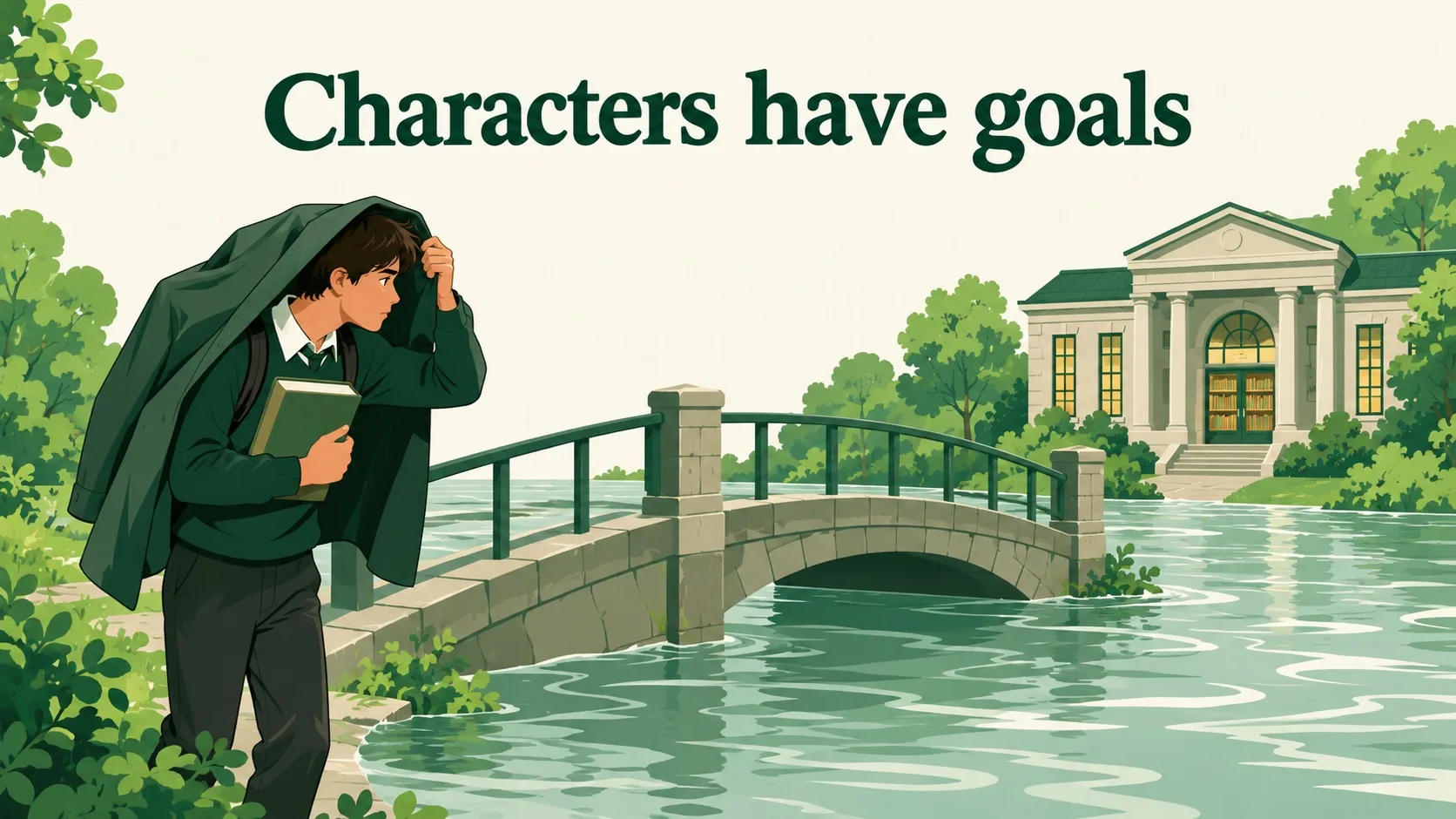
小说用虚构叙事展开人物和世界。小林想把借来的书送回去。雨水挡路,目标与阻碍让情节开始推进。A novel develops characters and worlds through fictional narrative. Lin wants to return a borrowed book. Flooding blocks the route: a goal and obstacle begin to drive events.
第 2 步:谁在讲故事Step 2: Who tells the story
事情相同,换人讲会怎样?What changes when the teller changes?
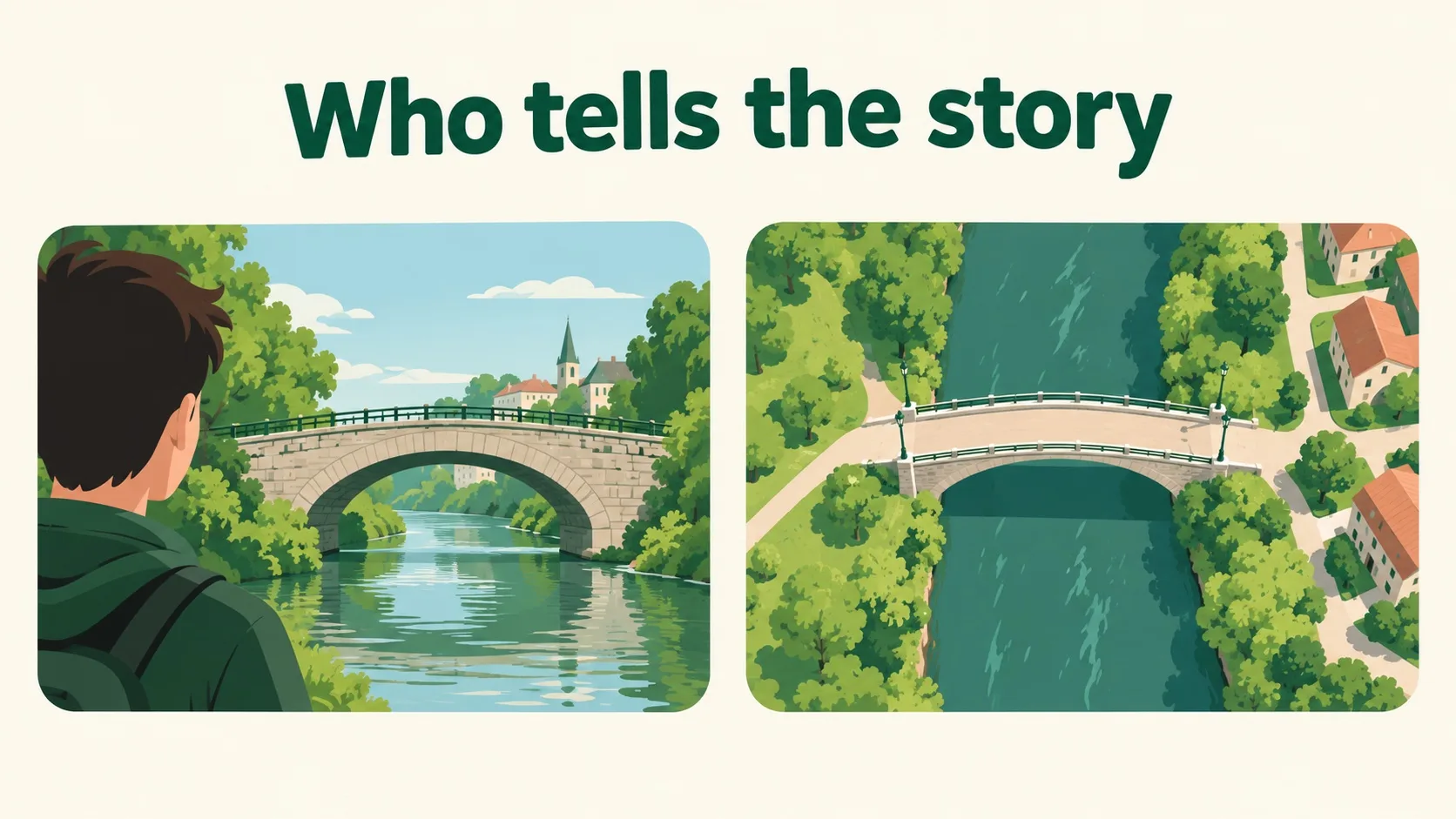
叙述者是讲故事的声音。第一人称只能按作品设定知道一些事。第三人称也可能限制视角。作者与叙述者不能直接画等号。The narrator is the storytelling voice. A first-person narrator has limits set by the work; third-person narration can also restrict perspective. Author and narrator are not automatically identical.
第 3 步:细节支持理解Step 3: Details support understanding
怎样判断人物是否改变?How can we tell whether a character changes?
开头小林只顾赶路,后来停下帮助别人。比较行动和对话,可以讨论主题。小说有历史背景,不代表每件情节都是真事。Initially Lin only hurries; later Lin stops to help someone. Actions and dialogue support discussion of themes. A historical setting does not make every event factual.
🎮 你来探索与判断🎮 Explore and reason
先操作实践台,再用四个挑战检验理解。每次判断都能看见理由。Explore the practice table, then try four challenges. Each judgment comes with a reason.
一句话记住它:小说通过人物、情节和视角展开世界。Remember: Novels develop worlds through character, plot and perspective.
目标与阻碍推动情节。Goals and obstacles drive plot.叙述者不等于作者。Narrator and author differ.主题解读要有细节支撑。Interpret themes using details.
来源与理解边界Sources and limits
叙事术语有通行用法,小说边界与解读仍可讨论。故事为教学原创。Narrative terms have common uses, while genre boundaries and interpretations remain discussable. The story is original.
来源查阅:2026 年 10 月 6 日。场景与例题为教学创作;插图为概念示意,不是历史实物照片。Sources checked on 6 October 2026. Scenarios and exercises are educational creations; illustrations are conceptual, not historical photographs.
参考上列公开资料 · AI 生成与自动化检查 · 欢迎提供可核查的勘误。Based on the public sources above · AI-generated and automatically checked · Verifiable corrections are welcome.
 Back to tree