算法推荐:谁决定你先看到什么Recommendation Algorithm: What Comes First
同一批校园短片,小禾与同桌看到的顺序不同。排序目标怎样改变我们接触的信息?He and a classmate see the same school videos in different orders. How do ranking objectives change exposure?
第 1 步:目标写进分数Step 1: Objectives enter the score
先看平台希望优化什么。First identify what the system optimizes.
推荐算法是生成候选、评分和排序的方法。它可能优化点击、观看、满意度或多种目标。一次点击不等于长久喜欢。小禾点开奇怪标题,也可能只是好奇。把某个指标当目标,会影响系统偏向哪些内容。指标选择包含人的决定。A recommendation algorithm finds candidates, scores and orders them. It may optimize clicks, viewing, satisfaction or several objectives. A click does not necessarily signal lasting approval: He may open an odd title out of curiosity. The chosen metric influences which content gains exposure. Choosing metrics is itself a human decision.
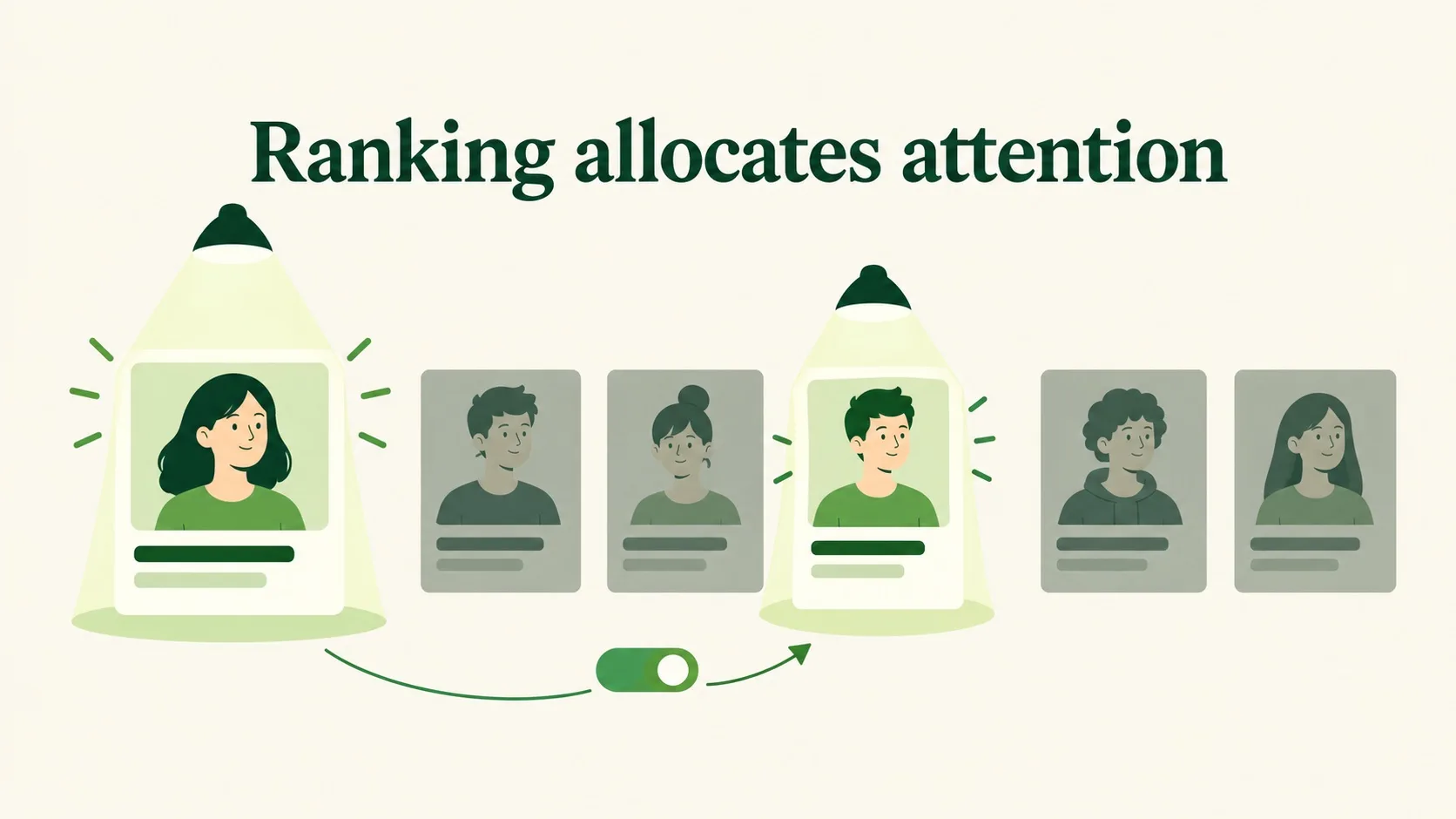
第 2 步:排序分配注意力Step 2: Ranking allocates attention
排在前面,会发生什么?What changes when an item ranks first?
前排内容更容易被看见,后排可能被忽略。排序既使用过去行为,也影响未来行为。这可能形成反馈环。新创作者或少数兴趣可能缺少初始机会。加入探索、多样性或质量要求,能改变分配。但各目标可能冲突,需要明确权衡。Top-ranked items receive more opportunities to be seen; lower items can be missed. Ranking both uses past behavior and changes future behavior, creating feedback. New creators and less common interests may lack an initial chance. Exploration, diversity or quality constraints change allocation, sometimes with competing trade-offs.
第 3 步:看得见的控制Step 3: Make controls understandable
使用者能做些什么?What can a user do?
小禾可以直接搜索、管理关注、反馈不感兴趣。平台也可以提供排序说明和选择。是否有效,要看真实实现。单个按钮不一定消除所有偏差。研究推荐影响时,要区分候选内容、显示顺序和用户选择,不能把所有结果都归因于一个算法。He can search directly, manage follows and provide preference feedback. Platforms can offer explanations and ranking choices, whose effect depends on implementation. A button cannot remove every bias. Studying impact requires separating available candidates, displayed order and user choices rather than attributing everything to one algorithm.
🎮 排序目标实验🎮 Ranking-objective experiment
切换观看时长、学习价值和探索权重,观察同一组视频怎样重新排序。Change viewing, learning and exploration weights and observe the same videos reorder.
一句话记住它:Remember: 推荐算法用目标和数据分配注意力,排序没有天然中立的唯一答案。Recommendation allocates attention using objectives and data; no ranking is automatically neutral.
指标不等于完整需求。A metric is not the entire need.排序影响下一轮数据。Ranking affects the next round of data.解释和选择有助于使用者判断。Explanations and choices help users evaluate.
把握度:基本反馈机制较高;社会影响因目标、群体和环境而异。分数为虚构。Confidence: high for basic feedback mechanisms; social effects vary by objectives, groups and context. Scores are fictional.
AI 辅助制作与资料核对。插图和互动为教学示意。AI-assisted production and source checking. Illustrations and interactions are teaching models.
 Back to tree