小禾在嘈杂车站口述“到河岸集合”。手机写错了词。录到声音,为什么还不等于听懂?He dictates a trip message in a noisy station and the phone chooses the wrong word. Why is recording sound not enough?
第 1 步:先把空气振动变成数据Step 1: Turn sound into data
麦克风先做了哪一步?What does the microphone do first?
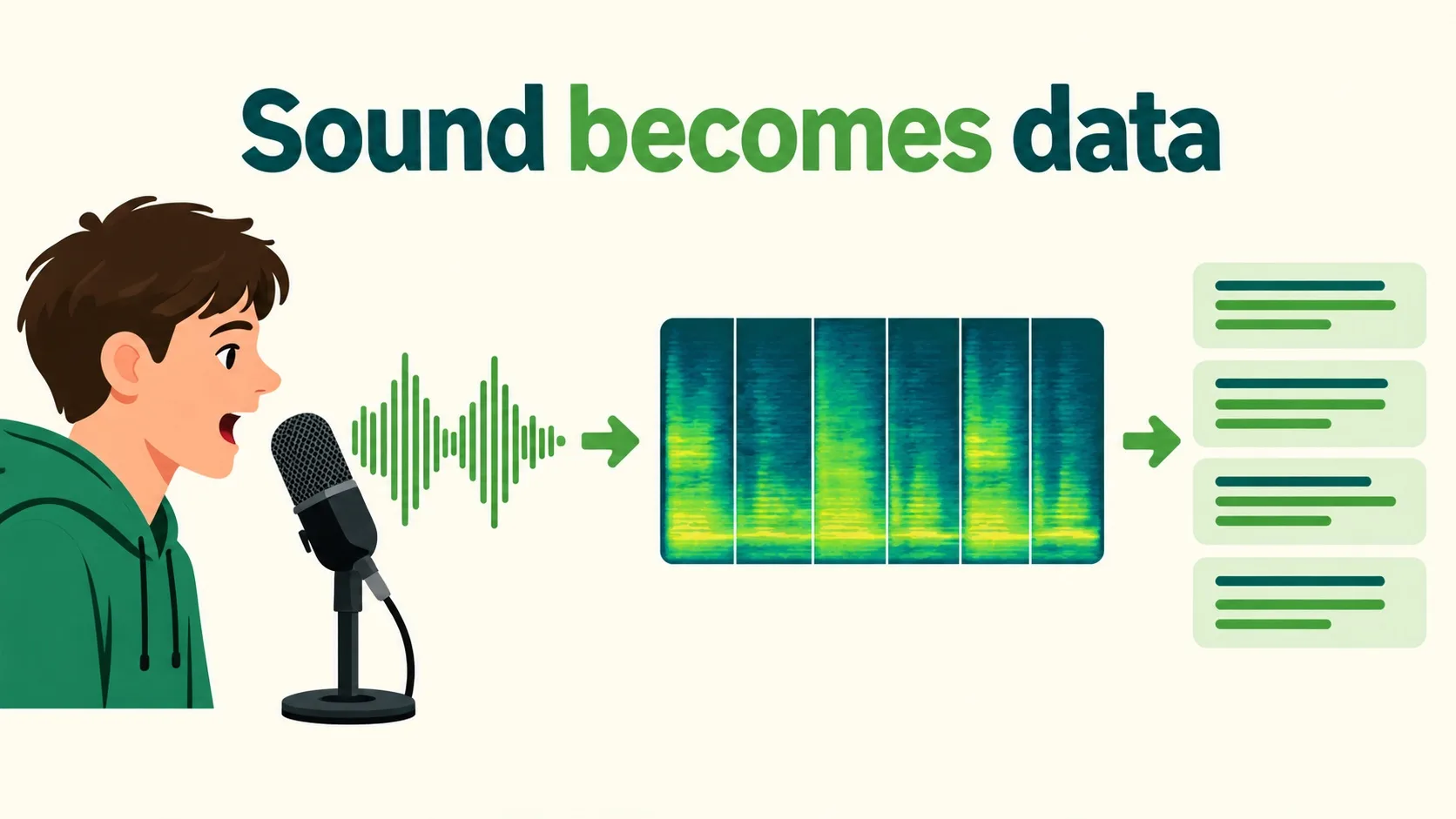
麦克风把空气振动变成电信号。采样再把信号变成数字。系统从中提取随时间变化的特征。说话速度、口音、回声和噪声都会影响这些特征。录音只是输入,不是文字答案。安静环境通常让声音线索更清楚。A microphone turns air vibrations into an electrical signal, then sampling produces digital data. A recognition system uses features that vary over time. Speaking rate, accent, echoes and noise affect them. A recording is input rather than a written answer. A quieter setting usually makes acoustic clues clearer.
第 2 步:声音与语境一起判断Step 2: Combine acoustics with context
读音相近时,怎样减少歧义?What helps when words sound alike?
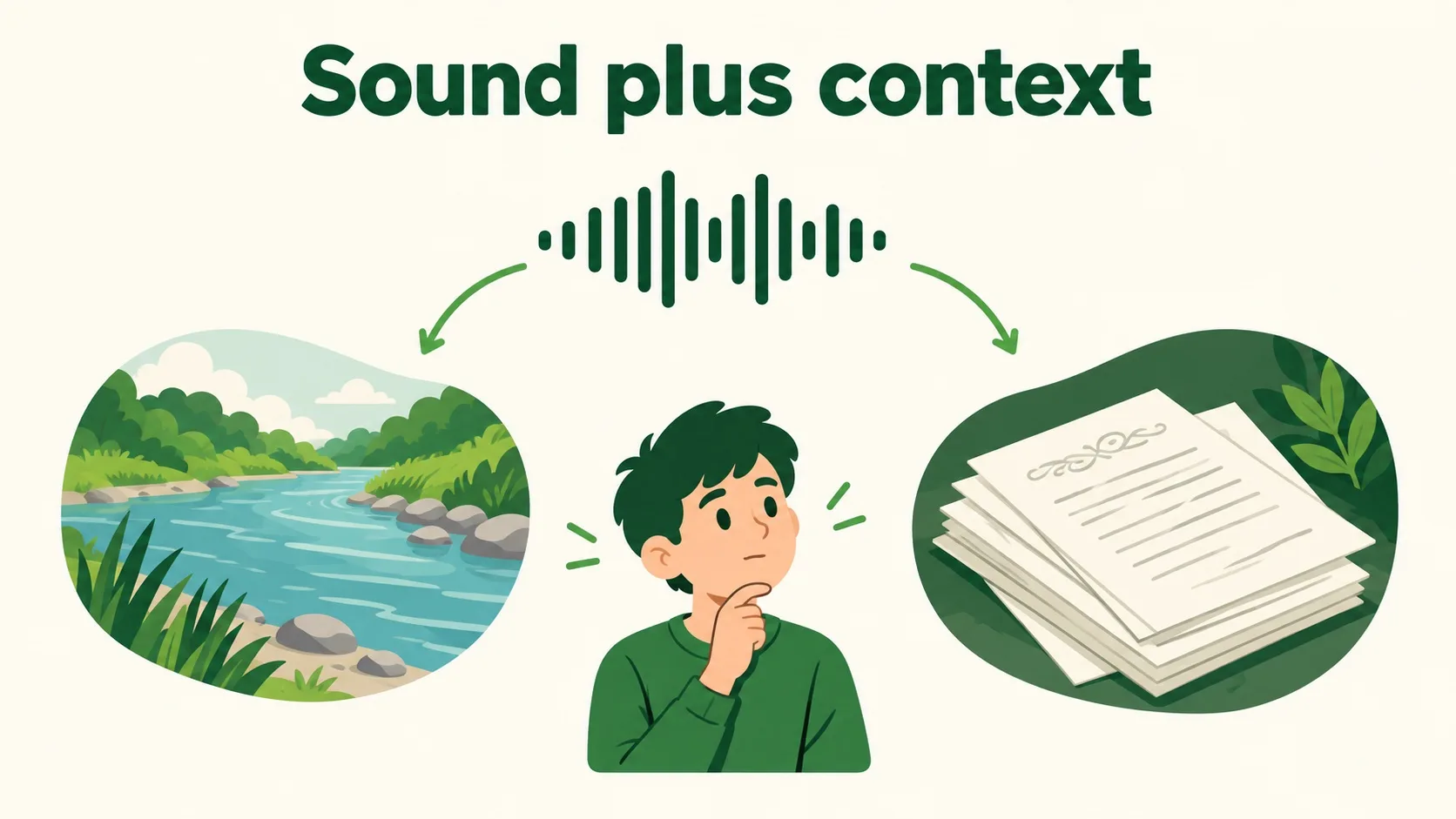
系统会比较可能的声音或文字序列。句子语境有助于选择更合理的表达。有的系统分声学与语言模块,有的模型端到端学习。语境只是线索,不应压过清楚的原音。专业词和人名可能不常见,却仍可能是正确答案。A recognizer compares possible sound or text sequences. Sentence context helps choose plausible wording. Some systems separate acoustic and language components; others learn end to end. Context is a clue, not permission to override clear audio. Uncommon specialist words and names can still be correct.
第 3 步:识别不等于理解Step 3: Recognition is not understanding
字幕出现了,就能放心发送吗?Are generated captions ready to send?
语音识别的目标是把话转成字。判断意图和执行任务是后续步骤。小禾先检查日期、地名和数量,再发送通知。不能听清的地方可重录或确认。真实系统还需照顾不同口音和听说障碍。下方用文字化声音线索模拟歧义,不收集录音。Speech recognition transcribes speech. Interpreting intent or acting on it are further tasks. He checks dates, places and quantities before sending. Unclear passages can be repeated or confirmed. Systems should also accommodate varied accents and disabilities. The activity represents sound clues in text and does not record audio.
🎮 歧义字幕工作台🎮 Ambiguous caption workbench
切换语境卡,再选符合声音与句意的字幕。这里是离线教学模拟。Inspect context cards and choose captions matching the represented sounds and meaning. This is an offline teaching simulation.
一句话记住它:Remember: 语音识别把声音转文字,歧义需要声音和语境共同核对。Speech recognition turns sound into text; ambiguity needs acoustic and contextual checks.
噪声会遮住声音线索。Noise can hide acoustic clues.少见名字也可能是正确答案。An uncommon name can still be correct.字幕准确不等于系统理解意图。Accurate captions do not imply intent understanding.
把握度:基础流程较高。引用包含经典系统,现代端到端架构可不同。Confidence: high for the basic pipeline. The source includes a classic system; modern end-to-end architectures can differ.
AI 辅助制作与资料核对。插图和互动为教学示意。AI-assisted production and source checking. Illustrations and interactions are teaching models.
 Back to tree